


-

Add: HeBei ShengShi HongBang Cellulose Technology CO.,LTD.
-

Email
13180486930@163.com -

CONTACT US
+86 13180486930






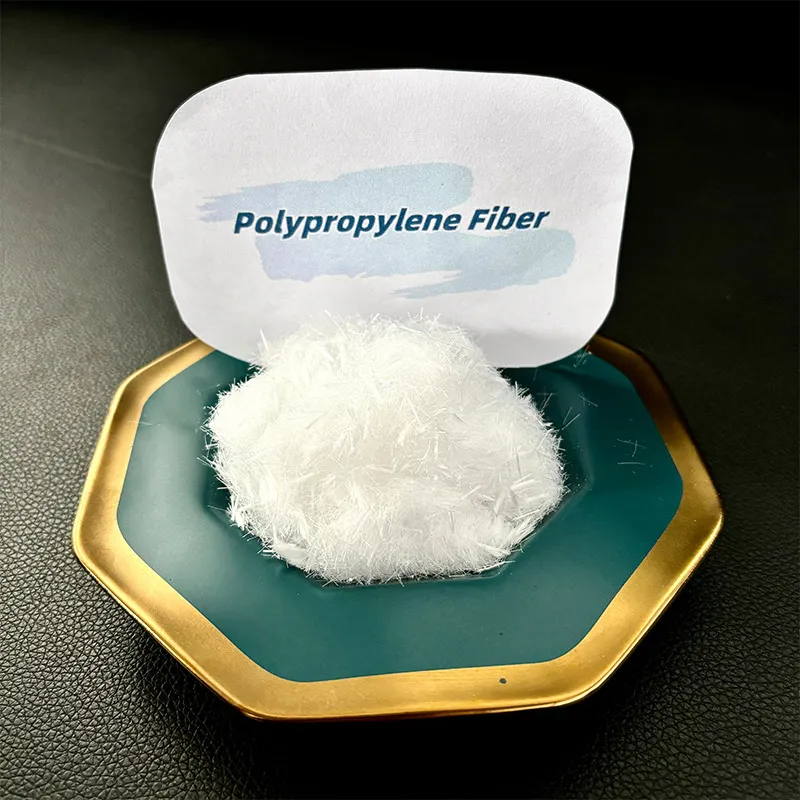
Polypropylene fiber is an innovative material that significantly enhances the performance characteristics of concrete and mortar, making it an essential component in modern construction applications. As a premier supplier, HeBei ShengShi HongBang delivers premium-grade polypropylene fibers that meet rigorous international standards for strength, durability, and performance optimization. Technical Specifications of Premium Polypropylene Fibers Parameter Standard Value Test Method Performance Benefit Fiber Length 3-20 mm ASTM D2130 Crack control optimization Diameter 18-45 microns ISO 1888 Optimal reinforcement distribution Tensile Strength 400-750 MPa ASTM D2101 Structural reinforcement Elastic Modulus 3.5-10 GPa ISO 527 Flexural strength enhancement Melting Point 160-170°C ASTM D7138 Heat resistance Density 0.91 g/cm³ ISO 1183 Ease of mixing Alkali Resistance >95% ASTM C1116 Concrete matrix longevity Dosage Rate 0.6-1.8 kg/m³ ACI 544 Plastic shrinkage reduction Industry Applications & Technical Advantages Concrete Reinforcement Our pp fiber products reduce crack formation by up to 85% while improving impact resistance by 150% (ACI Materials Journal). Mortar Enhancement Microfiber synthetic additives decrease permeability and improve freeze-thaw durability in mortar applications. Pavement Construction Integrating polypropylene fibre extends road lifespan by minimizing reflective cracking (Journal of Materials in Civil Engineering). Industrial Flooring Our fibers increase abrasion resistance and eliminate joint spacing limitations in warehouse slabs. Performance Analysis of Polypropylene Fibers Comparative strength development in fiber-reinforced concrete Surface durability under abrasion testing cycles (ASTM C944) Global market growth projections for synthetic fibers (2024-2030) Technical FAQ: Polypropylene Fiber Applications What fiber length provides optimal crack control? For most concrete applications, 12mm fibers demonstrate optimal performance with uniform dispersion and maximum crack-bridging capability according to RILEM technical recommendations. For spray applications, 6mm microfibers are preferred. How does aspect ratio affect reinforcement? Aspect ratio (length/diameter) directly influences bonding strength. We manufacture fibers with 200-500 ratios ideal for different mix designs. Higher ratios increase tensile strength but require careful mixing procedures. What polymer grade is suitable for aggressive environments? Our chemically-modified homopolymer fibers with pH stability from 1-13 withstand harsh chemical exposure exceeding 20 years according to ASTM C666 freeze-thaw certification. How does dosage affect compressive strength? Optimal dosages between 0.9-1.2kg/m³ increase compressive strength 15-20% as documented in ACI 544.3R reports. Higher dosages improve toughness but may slightly decrease workability. What surface treatments enhance bonding? Our proprietary hydrophilic coating improves fiber-matrix bond strength by 30% compared to untreated fibers (CTLGroup testing). This treatment also reduces mixing time. How do synthetic fibers compare to steel reinforcement? While steel provides primary reinforcement, polypropylene fiber offers secondary reinforcement with superior crack control, corrosion resistance, and freeze-thaw protection at 1/10 the material cost. What certifications does your production meet? Our manufacturing facility is ISO 9001:2015 certified with individual products meeting ASTM C1116, EN 14889-2, and JIS A6204 standards for consistent quality assurance. Industry Recognition & Technical Validation "Recent studies confirm that properly engineered polypropylene fibers can extend concrete service life by 40-60% by effectively controlling microcrack formation during critical curing stages." - International Journal of Concrete Structures and Materials Additional Technical References: "Performance Evaluation of Synthetic Fiber Reinforced Concrete" - American Concrete Institute ( www.concrete.org ) "Global Fiber Market Analysis 2023" - Fiber Cement Composite Research Council ( fibercomposites.org ) "Durability Enhancements through Microfibers" - Journal of Building Materials Science ( jbms.build ) "Comparative Analysis of Fiber Reinforcements" - Materials and Structures Journal ( matsstruct.springer.com ) "Advanced Production Techniques for PP Fibers" - International Fiber Association ( globalfibers.org ) Request Your Technical Sample Package Experience the ShengShi HongBang difference in our premium polypropylene fiber products engineered for superior performance. Contact Our Engineering Team Call: +86 13180486930 Email: 13180486930@163.com
- 40000tons

Production
- 20+years

Experience
- 5000+㎡

Acreage

-
Powder rubber, an increasingly popular material in various industries, offers a myriad of applications ranging from automotive to packaging. Born from the need to recycle and repurpose end-of-life rubber products, powder rubber provides an eco-friendly alternative with far-reaching benefits. This article aims to explore the unique properties and applications of powder rubber, backed by insights and experiences from industry experts, while highlighting its expertise, authoritativeness, and trustworthiness. Powder rubber is derived from the grinding process of vulcanized and cured rubber , most commonly from used tires. The process yields a fine, powdery material which retains many of the original rubber's properties, such as flexibility, elasticity, and durability. This makes it a prime candidate for integration into new products that can benefit from these characteristics. In terms of experience, manufacturers utilizing powder rubber have reported significant improvements in their end products. For example, automotive companies have incorporated powder rubber into tire formulations, resulting in a reduction of raw material costs and an enhancement in tire performance due to its excellent abrasion resistance. Similarly, powder rubber is used in asphalt mixtures, offering improved road durability with reduced cracking—a direct benefit observed by municipal governments focused on infrastructure resilience. Expertise in the formulation and application of powder rubber is crucial. Process engineers emphasize the importance of particle size and distribution, which directly affect the performance attributes of the final product. Expertise in selecting the right grade of powder rubber for specific applications can vastly influence product success. As a result, companies often collaborate with specialized rubber compounding experts to tailor solutions that meet specific performance criteria. Authoritativeness is established through numerous case studies and research reports that back the efficacy of powder rubber. Research conducted by leading materials science institutions shows that products containing powder rubber can exhibit enhanced tensile strength and resilience under stress. Furthermore, rubber industry conferences often feature discussions centered around technological advancements in processing techniques for powder rubber, underscoring its growing importance in the materials science domain. powder rubber Trustworthiness stems from the commitment of the powder rubber supply chain to sustainability and quality control. Reputable suppliers offer thorough documentation and quality assurance processes, ensuring that each batch of powder rubber meets stringent standards. These safeguards build confidence among manufacturers who integrate powder rubber into their products, knowing that they contribute to an eco-conscious lifecycle. An insightful example can be drawn from the footwear industry, where powder rubber is frequently used in shoe soles. Brands committed to sustainable practices leverage this material to create eco-friendly products without sacrificing comfort and durability. The positive consumer feedback and repeat purchases substantiate the trust in powder rubber as a reliable material choice. The future of powder rubber looks promising, with ongoing research aimed at expanding its use in new arenas such as 3D printing materials and advanced composites. With continued investment in research and industry collaboration, powder rubber is poised to become a cornerstone of sustainable material innovation. It not only supports recycling initiatives but also offers a practical solution to the growing demand for high-performance, environmentally responsible materials. In summary, powder rubber represents a confluence of innovation, sustainability, and practicality, holding a significant place in modern manufacturing paradigms. Its utilization in diverse sectors serves as a testament to its versatility and effectiveness. As more industries recognize its potential, powder rubber will undoubtedly continue to shape the future landscape of eco-friendly materials and products.
-
The Role of Starch Producers in the Ether Industry In the evolving landscape of modern industry, the synergy between traditional agriculture and emerging technology is becoming increasingly significant. Amongst the various bio-based materials, starch has emerged as a noteworthy player, particularly in its application within the ether industry. This article delves into the role of starch producers in the development of ether, examining the production process, applications, and the broader implications for sustainability. Understanding Starch and Ether Starch, a carbohydrate polymer made up of numerous glucose units, is predominantly sourced from crops such as corn, potatoes, and cassava. The starch extraction process involves grinding the raw material, treating it with water, and subsequently separating the starch granules. Once obtained, starch can undergo various chemical modifications to produce derivatives that can be used as ethers. Ethers, on the other hand, are organic compounds in which an oxygen atom is bonded to two alkyl or aryl groups. They are used widely in diverse industries, including pharmaceuticals, cosmetics, and food production. The use of ethers produced from starch is gaining traction due to their biodegradability and lower environmental impact when compared to synthetic counterparts. The Production Process Starch producers are pivotal in the supply chain for ether production. The journey begins with the cultivation of starch-rich crops, followed by efficient harvesting and processing. In many regions, this process not only supports local economies but also promotes agricultural sustainability. Once the starch is extracted, it is subjected to a series of chemical reactions. One common method involves the reaction of starch with alkyl halides in the presence of a suitable catalyst, leading to the formation of starch ethers. This modification improves the solubility and enhances the functional properties of starch, making it suitable for a wide array of applications. watengenezaji wa wanga ether Applications of Starch Ethers Starch ethers find applications across various sectors. In the pharmaceutical industry, they serve as excipients or binders in tablet formulations, enhancing drug delivery and stability. In the cosmetic sector, these ethers are valued for their thickening and emulsifying properties, contributing to the texture and stability of lotions and creams. Moreover, the food industry utilizes starch ethers as thickeners, stabilizers, and gelling agents. They provide essential functionality while meeting consumer demands for clean-label ingredients. As the trend towards natural and sustainable products continues to rise, the application of starch-based ethers is expected to expand further. Sustainability Implications The production of ethers from starch not only represents a technological advancement but also aligns with contemporary sustainability goals. Traditional petroleum-based chemicals are often linked to environmental degradation and climate change. In contrast, utilizing renewable resources such as starch reduces dependence on fossil fuels and promotes a circular economy. Starch producers who adopt environmentally friendly practices are fostering practices that contribute to biodiversity and soil health. Furthermore, as consumers become increasingly aware of sustainability issues, the demand for bio-based products is likely to grow. This shift presents an opportunity for starch producers to innovate and cater to a market that values environmental responsibility. Conclusion In conclusion, starch producers play a vital role in the ether industry by providing a sustainable raw material that meets various industrial demands. Their efforts not only support economic development but also lead to the creation of products that align with sustainability principles. As the world pivots towards greener alternatives, the relationship between starch and ether is set to become more crucial, leading to innovations that benefit both industry and the environment. The future of the ether industry looks promising, with starch at its heart, driving progress towards a more sustainable and eco-friendly landscape.
advantages
-

200000 Viscosities
Excellent product
We can produce pure products up to 200,000 viscosities
-

40000 tons
High yield
We don’t stop production all year round, and the annual output can reach 40,000 tons
-

24 hours
Quality service
We provide 24-hours online reception service, welcome to consult at any time
———— Inquiry Form
Schedule A services

-
 polypropylene_reinforced_concrete
Oct . 25, 2025
The Versatility and Applications of Polyvinyl Chloride Powder Polyvinyl chloride (PVC) is one of the -
 poda_ya_mpira_inayoweza_kusambazwa_tena
Oct . 25, 2025
Company Overview HeBei ShengShi HongBang Cellulose Technology CO.,LTD. Visit Official Website Tel: + - hpmc_4000_cps
Oct . 25, 2025
The Significance of Nylon Fiber in Modern Textiles Nylon fiber, first introduced in the 1930s, revol


